
If your breasts feel swollen, heavy, tender or painful, it can be tempting to massage firmly or try to “push the milk out.”
But with engorgement, inflammation or mastitis symptoms, firm massage can sometimes make things feel worse.
Gentle lymphatic massage and breast gymnastics are different.
These techniques are designed to help reduce swelling and improve drainage of excess fluid within your breast tissue. Many parents find they help relieve discomfort, soften the breast, and make feeding or expressing feel easier.
I often recommend these techniques to families I support with:
- Engorgement
- Blocked ducts
- Early inflammatory mastitis symptoms
- Breast swelling affecting latch
- General breast tenderness or fullness
What Is Lymphatic Massage?
Lymphatic massage uses very light, gentle strokes over your skin to encourage movement of lymphatic fluid.
This can help reduce swelling and inflammation within your breast tissue.
The key point is that this is not deep tissue massage.
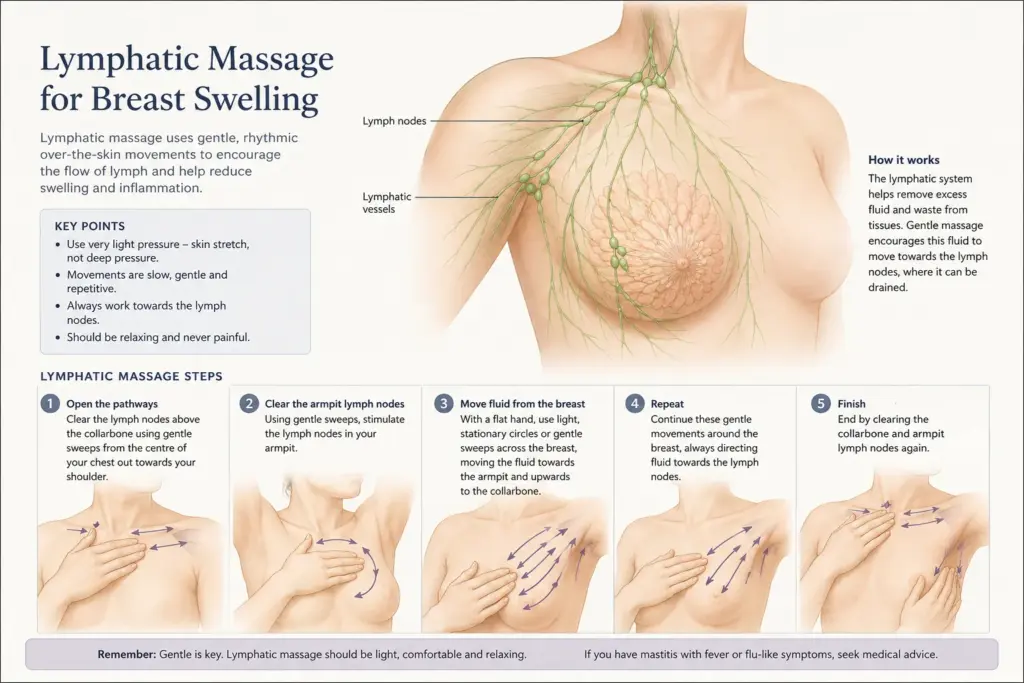
Your breasts contain delicate milk-making tissue, blood vessels and lymphatic vessels. Firm pressure can increase inflammation and tissue trauma, especially when your breasts are already swollen or painful.
Think:
- light sweeping motions
- skin movement rather than deep pressure
- gentle and comfortable, never painful
Many parents are surprised by how light the touch should be.
This video demonstrates lymphatic massage techniques for breast swelling and inflammation: Lymphatic Massage Video
What Are Breast Gymnastics?
Breast gymnastics involve gentle movement and lifting of your breasts in different directions.
The aim is to help reduce swelling and improve fluid movement within the breast tissue.
This technique can be particularly helpful when your breasts feel:
- very full
- tight
- swollen
- heavy
- difficult for your baby to latch onto
Some parents find breast gymnastics especially useful before feeds, as softening the breast slightly may help your baby attach more comfortably.
This video demonstrates breast gymnastics techniques that may help reduce swelling and improve comfort: Breast Gymnastics Video
When Might These Techniques Help?
These techniques may be useful if:
- your breasts feel overly full or engorged
- your breasts feel hard or tight
- you have localised swelling
- feeding feels uncomfortable because the breast is very firm
- you have early signs of inflammatory mastitis
- you are trying to improve drainage alongside regular feeding
Symptoms of inflammatory mastitis may include:
- pain or tenderness
- swelling
- redness
- warmth
- flu-like symptoms
- fever
If you feel unwell, develop a fever, or symptoms are worsening, it is important to seek medical advice promptly.
Breastfeeding can feel overwhelming — but you don’t have to work it out alone.
If you’d like calm, practical guidance with feeding, positioning or common challenges, I offer video consultations and face-to-face breastfeeding support in and around Salisbury.
You can also explore my Online Breastfeeding Course for clear explanations of how feeding works and how to manage common problems.
Important:
Avoid Aggressive Massage
Older advice sometimes recommended firm massage, vibrating devices, or trying to “break up” blocked ducts.
Current guidance suggests avoiding aggressive massage techniques, as these can increase inflammation and tissue damage.
Instead:
- use gentle lymphatic massage
- continue feeding responsively
- avoid trying to “empty” your breasts excessively
- wear a comfortable, non-restrictive bra
- rest where possible
- stay hydrated
- use simple pain relief if appropriate for you
How Often Should You Do It?
There is no exact rule, but many parents find it helpful to:
- do a few minutes before a feed
- repeat several times through the day if needed
- stop if it feels uncomfortable or irritating
- 1 to 2 minutes on each breast 2 to 4 times per day is usually appropriate.
You do not need long sessions. Gentle and regular is usually more helpful than intense treatment.
A Final Reassurance
Engorgement and mastitis symptoms can feel overwhelming, particularly when you are exhausted and feeding frequently.
In many cases, gentle management and reducing inflammation can make a significant difference over 24–48 hours.
If things are not improving, symptoms worsen, or you feel increasingly unwell, please seek further support from your midwife, GP, breastfeeding specialist or feeding support team.
You Might Also Find These Helpful