Bringing your baby home can feel overwhelming enough without hearing that they have “lost weight.”
For many parents, the first weigh-in after birth can trigger worry, guilt, or panic — particularly if breastfeeding is still feeling new and uncertain.
The important thing to know is this:
Some weight loss in the first days after birth is completely normal.
In fact, almost all babies lose weight after they are born, whether they are breastfed or formula fed. Understanding why this happens — and when extra support may be needed — can help you feel far more confident in those early newborn days.
Why Do Newborn Babies Lose Weight After Birth?
During pregnancy, your baby has been surrounded by fluid in your womb. Their body tissues naturally absorb some of this fluid before birth, and after birth they begin to shed it.
At the same time:
- your baby is passing meconium (their first dark sticky poos)
- urine output is often greater than milk intake in the very early days
- colostrum is produced in small but concentrated volumes
- babies are adapting from life inside the womb to feeding outside of it
All of this contributes to early weight loss.
In addition, if you received IV fluids during labour — for example with an epidural or caesarean birth — this can also temporarily increase your baby’s birth weight, meaning they may appear to lose more weight afterwards as the excess fluid is passed out naturally.
Is Weight Loss Normal in Breastfed Babies?
Yes — weight loss is normal in both breastfed and formula fed babies.
However, exclusively formula fed babies often lose slightly less weight in the first days because formula volumes are typically larger than the normal small volumes of colostrum.
This does not automatically mean breastfeeding is not working.
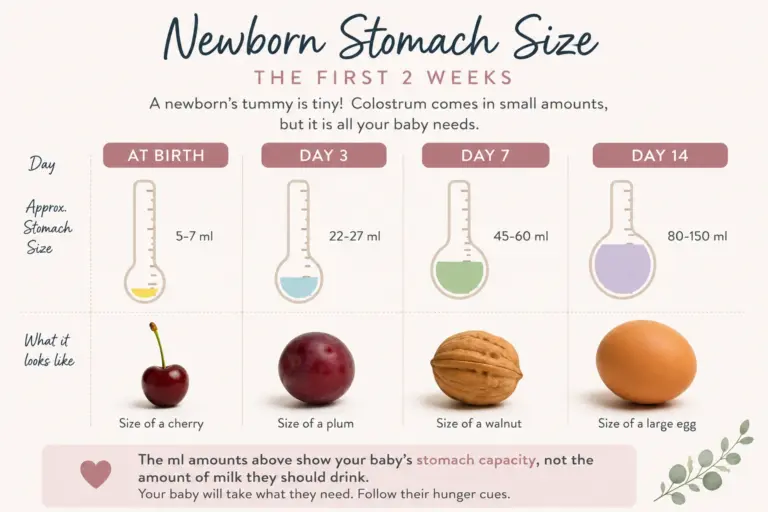
Colostrum is incredibly concentrated and designed specifically for your newborn’s tiny stomach in the early days. Frequent feeding, skin-to-skin contact, and effective milk transfer are usually far more important than the exact volume your baby is taking at each feed.
When Should a Baby Regain Their Birth Weight?
Most babies reach their lowest weight somewhere between days 3 and 5. In the UK babies are commonly weighed on day 5, alongside performing the newborn blood spot screening test. After this point, weight usually begins to increase as milk volumes rise.
Most babies regain their birth weight within the first two weeks.
Research suggests:
- around 75% of babies are back to birth weight by 7 days
- around 95% are back to birth weight by 14 days
Some healthy babies may take slightly longer, particularly after:
- caesarean birth
- maternal IV fluids in labour
- prematurity
- larger birth weights
- difficult or sleepy starts to feeding
Your midwife will usually continue supporting your family until your baby has regained their birth weight and feeding is progressing well. This means you are not expected to manage these early weight checks alone, and additional support can be arranged if needed.
What matters most is that feeding, output, and weight are assessed together — not in isolation.
How Much Weight Loss Is Considered Normal?
Healthcare professionals often become more cautious when weight loss reaches around 8–10%.
That does not automatically mean something is wrong.
Sometimes babies within this range are still feeding and behaving normally and simply need closer follow-up and feeding support.
The key question is usually:
Why is the weight loss happening?
Breastfeeding can feel overwhelming — but you don’t have to work it out alone.
If you’d like calm, practical guidance with feeding, positioning or common challenges, I offer video consultations and face-to-face breastfeeding support in and around Salisbury.
You can also explore my Online Breastfeeding Course for clear explanations of how feeding works and how to manage common problems.
What Causes Excessive Weight Loss in Newborns?
The most common cause of slow weight gain or delayed return to birth weight is poor milk transfer. This means your baby may not be effectively removing milk from your breast, even if they appear to be feeding frequently.
Common reasons can include:
- shallow attachment
- sleepy feeding
- infrequent feeds
- short feeds
- tongue function concerns
- breast discomfort leading to shortened feeds
- delayed milk production
- separation after birth
This is why feeding assessment matters so much.
Simply offering formula without assessing feeding effectiveness may not address the underlying issue — and in some situations can accidentally reduce milk supply further if breastfeeding frequency decreases.
Signs Your Baby May Need Extra Feeding Support
Seek support from your midwife, health visitor, or breastfeeding specialist if your baby:
- is very sleepy and difficult to wake for feeds
- is feeding less than 8-12 times in 24 hours
- has reduced wet or dirty nappies
- seems persistently unsettled after feeds
- has jaundice worsening alongside feeding concerns
- is continuing to lose weight after day 5
- has not regained birth weight by around 2 weeks
- feeding feels painful or difficult
Getting support early often makes a huge difference.
Try Not to Focus Only on the Scales
Weight is just one piece of the picture.
Your baby’s:
- feeding behaviour
- nappies
- alertness
- colour
- muscle tone
- and overall wellbeing
all matter too.
And importantly — a single weight rarely tells the whole story.
During the Covid pandemic, I carried out many postnatal checks remotely over the telephone rather than face-to-face. As midwives, we had to assess whether babies appeared to be feeding and thriving well without the reassurance of frequent weight checks or the usual expectation that babies had regained their birth weight before discharge from care.
That period reminded many professionals that thriving is about much more than a number on the scales.
Of course, weight remains an important tool, particularly if there are feeding or health concerns, but healthy babies can often be identified by the bigger picture too — their feeding patterns, nappies, alertness, and how they are developing overall.
If your baby’s healthcare team has concerns, they should guide you through appropriate follow-up and support.
Download My Free Baby Weighing Timeline
Healthy babies usually do not need frequent weighing once feeding is established.
I’ve created a free printable timeline showing:
- when babies are normally weighed in the first year
- when additional weighing may be appropriate
- when frequent weighing can become unhelpful
Want More Feeding Support Before Your Baby Arrives?
If you’re pregnant and want to feel more confident about feeding before birth, my online breastfeeding course covers:
- how feeding works in the early days
- what normal newborn behaviour looks like
- attachment and positioning
- hand expressing
- signs milk transfer is going well
- common feeding challenges
Preparing in pregnancy can make those first newborn days feel far less overwhelming.