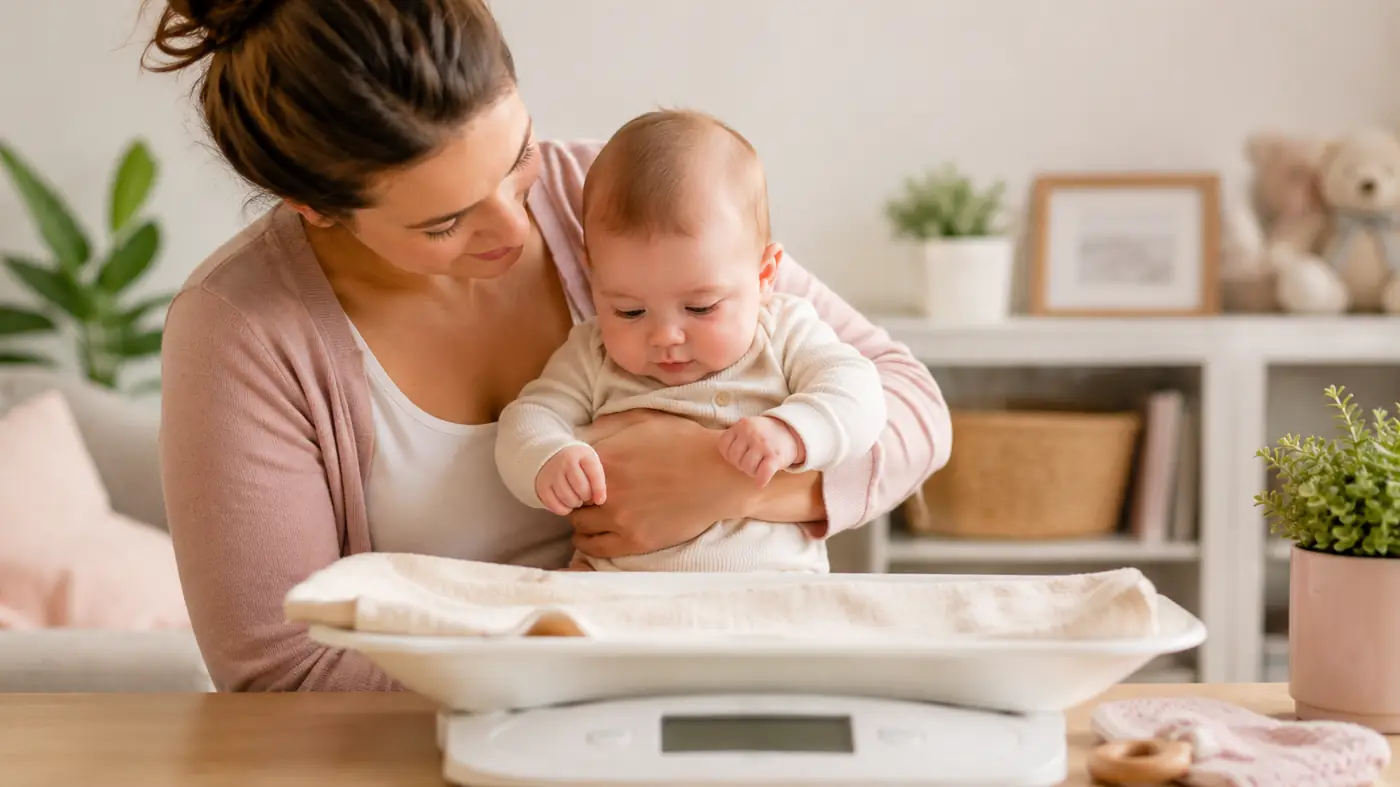
I’m frequently asked by parents:
“How often should my baby be weighed?”
It’s a sensible question.
Weight checks are used regularly in the first weeks after birth, so it can sometimes feel as though you should continue monitoring your baby’s weight very closely throughout infancy.
But in reality, healthy babies usually need weighing far less often than many parents expect.
Understanding when babies are normally weighed — and when additional checks may or may not be helpful — can make growth charts and clinic appointments feel easier to understand.
Why Are Babies Weighed?
Weight is one of the tools healthcare professionals use to assess how well a baby is feeding, growing, and thriving.
Particularly in the newborn period, weight checks can help identify babies who may need additional feeding support or medical review.
However, weight is only one piece of the picture.
Healthcare professionals also consider:
- feeding behaviour
- wet and dirty nappies
- alertness
- colour
- muscle tone
- development
- and your baby’s overall wellbeing
A single weight never tells the whole story.
When Are Babies Usually Weighed in the UK?
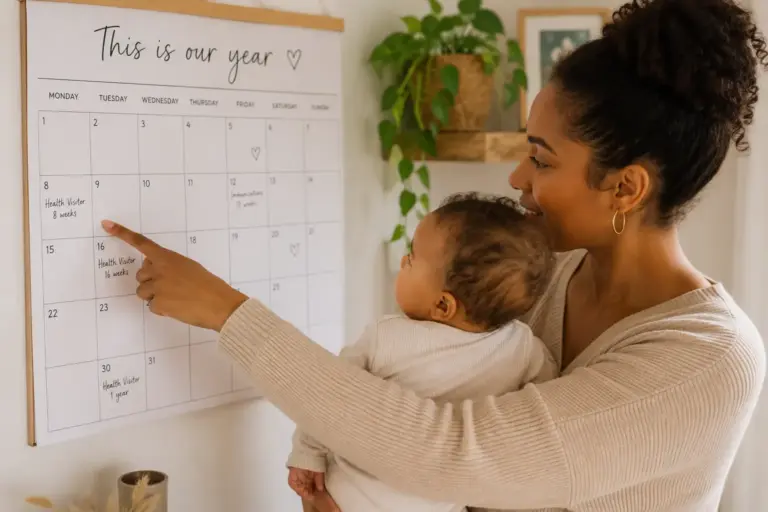
Exact schedules can vary slightly between areas, but healthy babies are usually weighed:
- at birth
- around day 5
- around days 10–14 if needed until birth weight is regained
- at 8 weeks
- at 12 weeks
- at 16 weeks
- and again at around 1 year
Your midwife will usually continue supporting you until your baby has regained their birth weight and feeding is progressing well.
After this, most routine weighing is carried out by your health visiting team.
Why Don’t Babies Need Weighing Every Week?
Many parents assume more weighing must automatically be better.
But frequent weighing can sometimes make normal small fluctuations appear more significant than they really are.
Baby weight naturally varies slightly depending on things like:
- whether they have recently fed
- a large poo before the appointment
- mild illnesses such as a cold
- hydration levels
- different scales being used
In the early months, babies may only gain around 20–30g per day on average, so small day-to-day differences can appear surprisingly dramatic on the scales.
This is why healthcare professionals are usually much more interested in your baby’s overall growth trend over time rather than individual isolated weights.
Your Baby’s Growth Chart Is More Important Than a Single Number
Your baby’s red book growth chart is designed to help healthcare professionals look at growth over time.
Rather than focusing on one individual weight, the chart helps show whether your baby is generally following their own curve.
Some babies are naturally smaller.
Some are naturally larger.
Some grow rapidly early on and then slow down.
Healthy growth is rarely perfectly straight or predictable.
Download My Free Baby Weighing Timeline
I’ve created a free printable timeline showing:
- when babies are usually weighed in the first year
- when additional weighing may be appropriate
- and when weighing too frequently may become unhelpful
It’s designed to help you feel more confident understanding what is normal.
More Information About Weight Gain or Newborn Weight Loss?
This article focuses mainly on when babies are usually weighed in the first year.
If you are looking for more detailed information about:
- what normal newborn weight loss looks like
- when babies should regain their birth weight
- how much weight babies should gain after the newborn period
- or what it means if your baby drops a centile
you may find these articles helpful too: